The K-12 education system in the United States forms the foundation of academic development. It includes kindergarten through 12th grade and prepares students for higher education or the workforce.
Structure of K-12 Education

The U.S. K-12 system is divided into:
- Elementary School (K–5)
- Middle School (6–8)
- High School (9–12)
Students typically begin kindergarten at age five and graduate high school around age eighteen.
Curriculum and Subjects
Core subjects in U.S. schools include:
- Mathematics
- English Language Arts
- Science
- Social Studies
Students may also take electives such as music, art, foreign languages, and computer science.
Public vs. Private Schools
Public schools are funded by local and state governments and are free for residents. Private schools charge tuition and may offer specialized programs. Charter schools operate with more flexibility but receive public funding.
Standardized Testing
Standardized exams like SAT and ACT play a role in college admissions. State assessments measure academic progress and accountability.
Conclusion
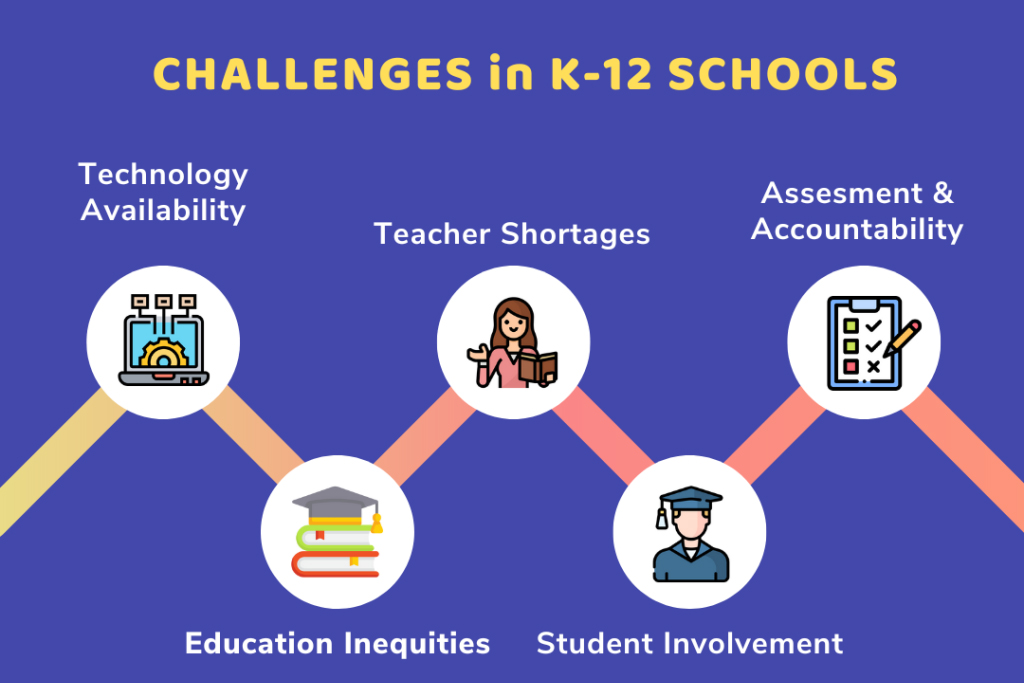
The K-12 education system in the United States provides structured academic growth and skill development. While challenges such as funding disparities exist, the system continues to evolve to meet modern educational needs.